Try Weglot for free


Multilingual SEO optimizes websites for different languages and regions, helping search engines show the correct language version to specific audiences. Good multilingual SEO connects users with content in their native language at the right moment.
Expanding your brand means getting your international SEO just right. Alongside technical aspects, SEO is no longer dominated by search engines alone. The rise in AI Overviews and people using the likes of ChatGPT for search means a brand new way of looking at things.
Tools like Yoast have made basic SEO accessible to everyone, but multilingual SEO requires specific strategies that go well beyond basic optimization. AI-powered translation tools now automate the technical complexities of manual methods, making global expansion faster and simpler than ever. Let’s take a look at what actually works.
As we’ve seen, multilingual SEO optimizes website content for international users. This helps you rank in new markets, and people in different countries can find your website through organic search.
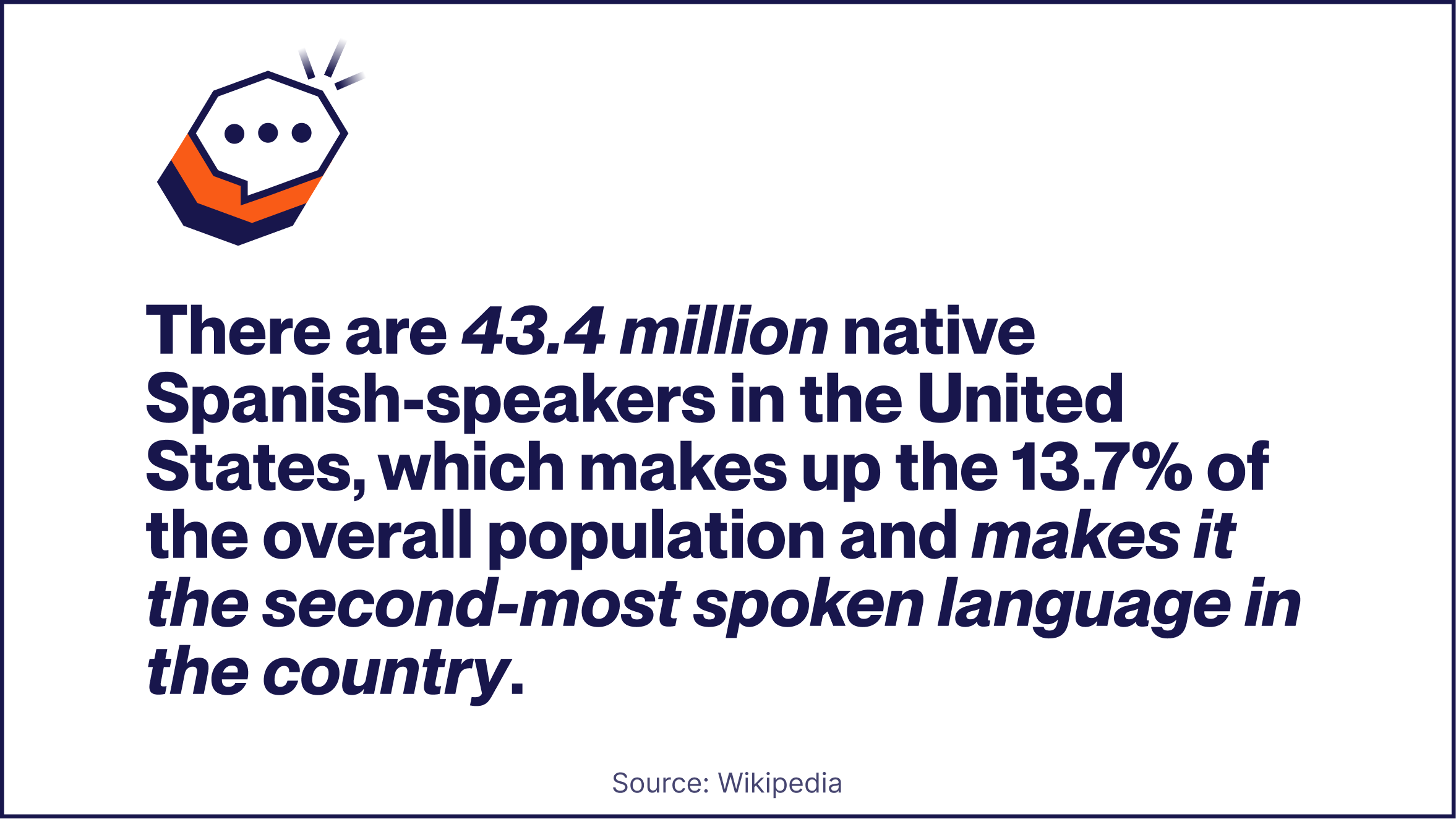
Even in the US, millions of potential customers prefer content in Spanish, Chinese, or other languages.
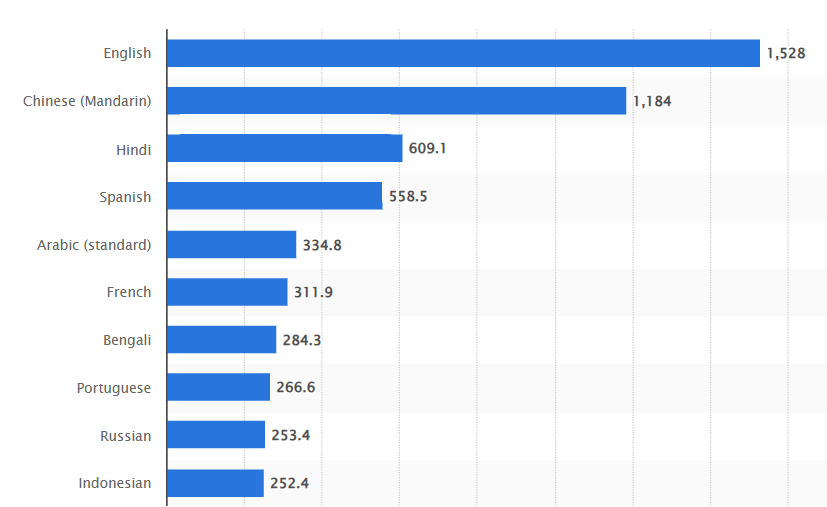
And as statistics show in our graphic below, while over 1 billion people speak English or Mandarin, over 500 million speak Hindi or Spanish:
What’s more, although 49.2% of web content is found in English, 50.2% is found in other languages. Such figures demonstrate that huge potential exists for those investing in overseas markets through multilingual SEO.
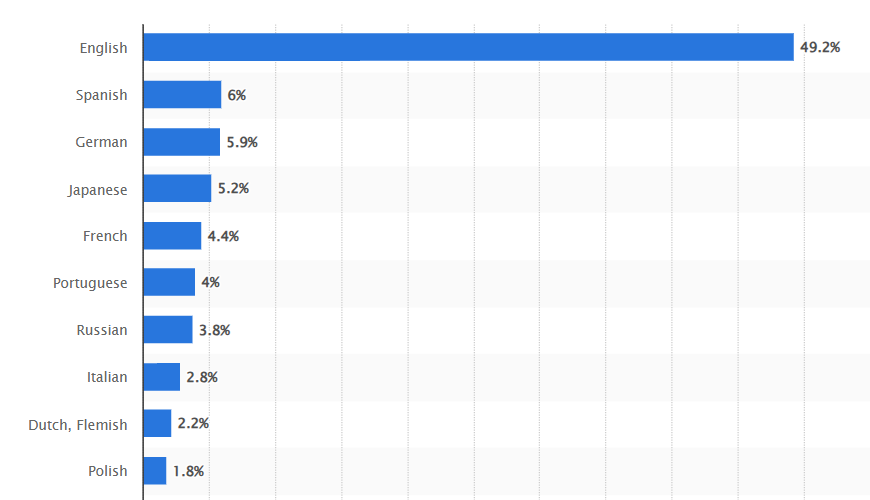
Here’s an example – a vast number of Spanish speakers exist worldwide, but only 6% of the net is found in Spanish. According to a 2020 CSA Research study, 76% of online shoppers prefer buying products with information in their native language. That makes for a potentially large audience of people who would prefer to read Spanish content over English. Brands meeting this need can likely gain a competitive advantage over those who stay monolingual.
Multilingual SEO is best thought of as a process – there’s no finishing line, like with a project. Your whole site needs to be fully translated, and any new content in your native language needs to go multilingual as soon as possible. Then there’s the technical side – site structure, hreflang tagging, and metadata – to contend with.
You can do this through online tools like Google Translate, but relying on browser translation means missing out on:
This approach also leaves you with a heavy manual workload with lengthy timescales. A better process is found by integrating your CMS with a dedicated AI translation tool, which automates the translation process alongside a tech free SEO setup. We’ll detail this process shortly – first up, here’s the perfect framework for a winning strategy.
Start with audience research. Search habits vary wildly between countries, so what works in the US can flop in Japan – the former react well to transactional incentives, while the latter favor detailed reviews and trust factors. In another example, many Germans enjoy comparison articles, whereas Brazilians are fans of video-driven content. Your strategy needs to account for these differences.
Optimizing for keywords still has its place, but research should be topic-focused. Instead of focusing on single keywords, look for related terms around the same topic. There may be opportunities to create several posts around the same topic, in order to answer the queries searchers are looking for.
AI Overviews have added another layer to the engine-focused search industry of old. They prioritize content that answers specific questions directly, so your multilingual content needs atomic clarity – sentences under 25 words that AI can extract and cite. Given that LLMs can understand more complex and detailed queries than search engines, there are big opportunities here in optimizing for specific long tail keywords.
Consider these strategic elements also when planning your content strategy:
“When I want to enter a new market, I identify my competitors by differentiating between SERP and product competitors because they aren’t necessarily the same. A product competitor might not be visible in search, and thus not be very powerful in SEO.”
– Anna Llorente Pérez, Global Content Strategist Lead, Doofinder
Content localization adapts website content beyond word-for-word translation, while translation alone converts text between languages.
For some markets, you’ll need experts to refine your word choices so they don’t cause offense or appear out of date. Localization also adjusts cultural references, date formats, currencies, and regional preferences for target markets.
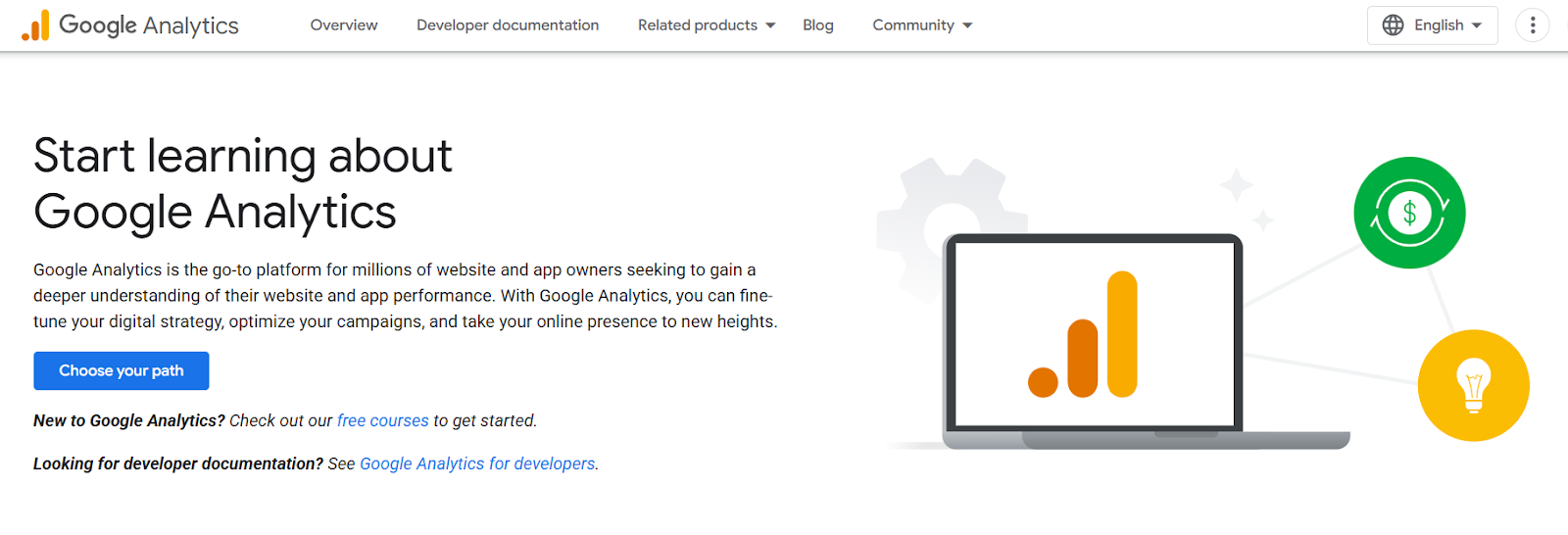
Use Google Analytics 4’s international reports to identify where your traffic originates. Navigate to Reports > User Attributes > Demographic, then filter by Country or Language. Compare current visitors to target markets – the gap presents your opportunity.
Research search volume in potential target languages using Ahrefs Keywords Explorer or Google Keyword Planner, and check monthly searches for your primary keywords in each language. Don’t assume English demand equals equivalent demand in other markets – search patterns differ dramatically.
Build a decision framework weighing revenue potential against competition and available resources. Start with one language first to learn the process before scaling. Prioritize markets where you already have visitor traffic, clear business expansion goals, or favorable competitive conditions.
Create language-specific segments in GA4 to track performance by audience. Add each language version of your site to Google Search Console as a separate property or URL prefix. Set up conversion tracking with language parameters to measure which translations drive revenue. Build dashboard widgets comparing traffic, engagement, and conversions across all language versions – this data guides optimization decisions.
For ecommerce sites, think beyond translation. Consider currencies, shipping zones, and local payment methods. Your SEO strategy connects to your entire international presence.
{{tools-banner}}
Weglot's AI-powered translation tool connects to WordPress in five minutes through plugin installation, with other CMS taking less than 10. The tool automatically scans your entire site and translates all content instantly using AI translation engines. You can choose from 110+ languages through the dashboard language selector, and translated pages display under SEO-friendly URLs with automatic hreflang tags and metadata translation.
Put simply, Weglot’s Connect > Translate > Launch process is as easy as 1, 2, 3!
There are nine key steps to optimize your site’s search engine rankings:
Dedicated URLs are unique web addresses that include language indicators. Multilingual sites often fear duplicate content penalties, and Google’s official documentation addresses this concern directly.
Language-specific URLs prevent duplicate content issues. Each language version needs its own distinct URL. French pages use example.com/fr/. German pages use example.com/de/. Spanish pages use example.com/es/.
Search engines use these indicators to understand page language, and users immediately recognize which language version they’re viewing. URL structure affects SEO performance, so it’s a must-have. Content appearing within multiple URLs without clear language signals may lead to penalties such as lowered rankings or even deindexing.
Three URL structure options exist for multilingual sites:
Subdirectories win for most sites. We use them at Weglot because they balance technical simplicity with SEO effectiveness, but you can of course switch to subdomains or CCTLDs if you prefer.
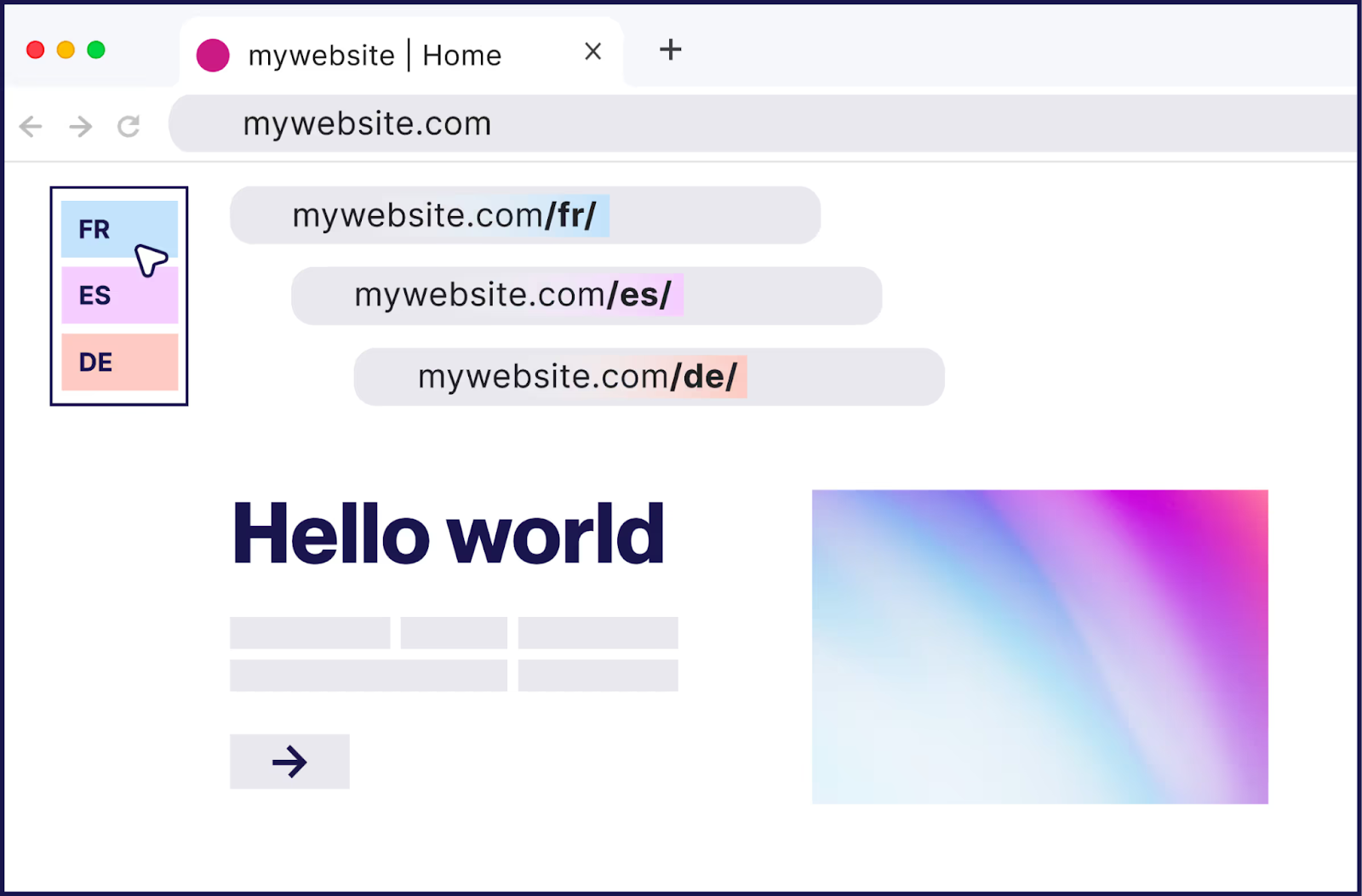
No – Google does not penalize correctly implemented multilingual content. Google expects global sites to reuse content across languages for different audiences. Problems occur only when Google cannot determine which version serves which audience – dedicated URLs with clear language indicators prevent duplicate content issues.
Hreflang tags are HTML elements that specify a page’s language and geographical targeting. Google uses hreflang tags to prevent showing French pages to Spanish speakers.
Hreflang tags prevent incorrect language versions from ranking in regional searches. They also ensure you avoid duplicate content confusion between translated pages. Naturally, correct hreflang tagging improves click-through rates by matching user language preferences.
These tags look like this:
<link rel="alternate" hreflang="fr-ca" href="http://example.com/fr/" />This tells Google: “Here’s our French page for Canadian users.”
Server-side translation renders translated content before sending pages to browsers. Search engine bots read translated text directly in page source code, improving indexing accuracy.
Sounds straightforward? It's not.
John Mueller, Google's Senior Search Analyst, admits hreflang implementation is “one of the most complex aspects of SEO.” Even experienced developers mess it up.
Common hreflang mistakes include:
Google's hreflang documentation provides the technical specifications. But manual implementation takes hours and invites errors.
Hreflang annotations are Google’s primary signal for language targeting. User context (location, browser language settings) combines with hreflang to refine selection, while page content language detection serves as fallback when hreflang is absent.
Weglot automatically generates all hreflang tags, updates when adding pages or languages, prevents common implementation errors, and provides a validation checker.
{{ebook-banner}}
Mixed-language pages confuse both users and search engines. For best results, pick one language per page and stick with it!
It may be tempting to translate some areas of a web page while keeping other parts in the original language. You might think partial translation saves time, but here’s what happens with mixed-language content:
Common mixed-language mistakes include:
Internal links should also point to pages in the same language as the linking page. French blog posts need to link to other French pages, not English pages. Language-consistent linking improves user experience and strengthens SEO signals within each language version.
User-generated content poses further challenges. Forum posts and reviews come in various languages, but mixing them dilutes SEO value and frustrates readers who can’t follow conversations.
Automatic content detection is the solution, which continuously scans websites for new and updated content across all page elements. Weglot’s AI-powered detection finds all content automatically – navigation, widgets, reviews, third-party apps – ensuring complete translation.
Place your language switcher where users expect it – header, footer, or as a floating button. Use language names (English, Français, Deutsch) rather than flags, since flags represent countries, not languages. Names improve accessibility for screen readers.
Ensure your switcher works on mobile devices with touch-friendly sizing. Language switcher links must be crawlable HTML, not JavaScript-only elements, so international search engines can find the right language version. To find out more, see our guide to configuring Weglot’s language switcher.
Metadata is the hidden text that appears in search results. It includes title tags, meta descriptions, and image alt text.
When you create a multilingual website, it’s not just the content on your site that needs to be translated. Imagine French users seeing English titles in their search results – they’re far less likely to click, so you’ve lost them before they even reach your site. Untranslated metadata kills your multilingual SEO.
Effective metadata translation goes beyond word-for-word conversion:
German metadata needs more characters than English, while Japanese descriptions work differently than Spanish ones. Each market has unique patterns that affect click-through rates, so be sure to do your research. Our own tool Weglot translates metadata automatically, then lets you refine it.
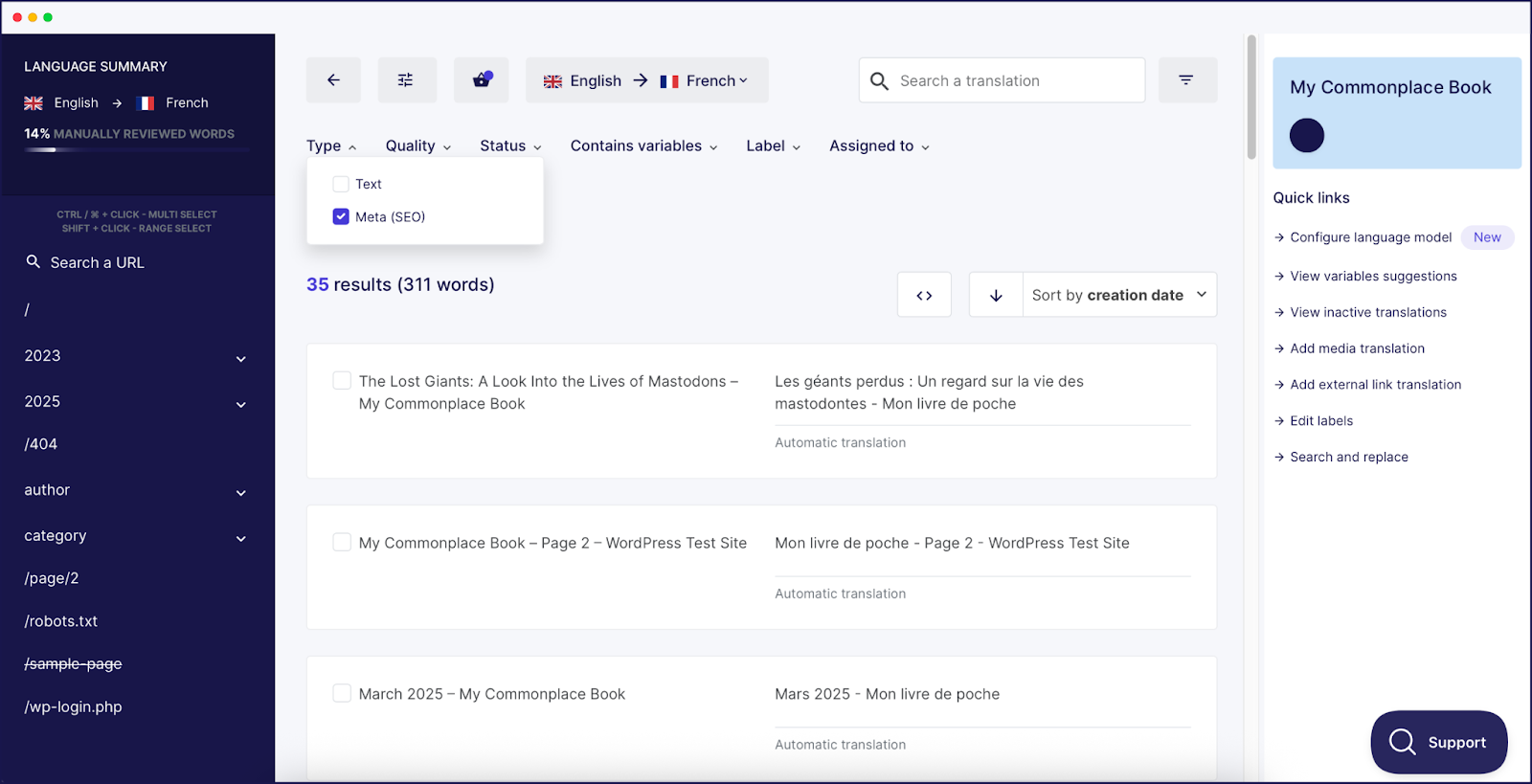
With Weglot, you can also use the Visual Editor to preview how your pages appear in search results. Tweak until they’re irresistible to click.
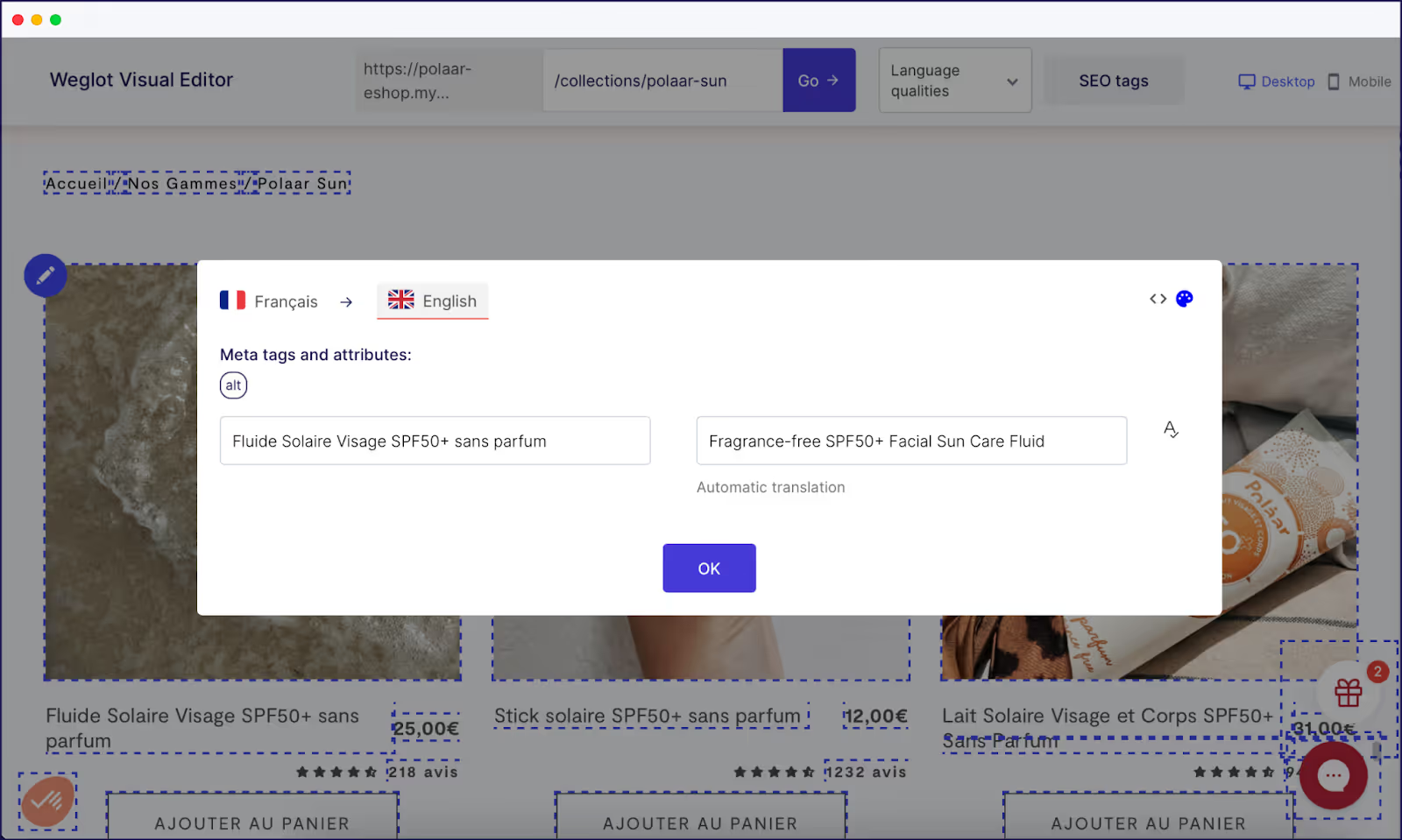
Existing caption: Polaar, which uses Weglot to translate hundreds of new products daily on its website.
With Google using generative AI to suggest more accessible, conversational insights when using the search function – AKA AI Mode or AI Overviews – traditional multilingual SEO strategies no longer give the full picture.
Google's AI search emphasizes Google's E-E-A-T criteria (Experience, Expertise, Authoritativeness, and Trustworthiness) to offer the most relevant results possible to users. Keeping up with such algorithmic shifts is a must for site owners.
Today’s searches are phrased casually to add more context to search queries that are often written as questions – typically made up of long-tail keywords, which are more specific and usually made up of at least five words.
What’s more, Google's AI Overviews have changed everything. These AI-generated summaries usually appear above traditional search results. They pull information from sites with clear, structured content.
For multilingual SEO, AI Overviews create new challenges:
This means long-tail keywords have become higher-value opportunities. AI Overviews favor specific questions with direct answers. "How to translate website into Spanish for Mexican market" beats "website translation" for featured placement.
Research long-tail variations in each target language. What sounds natural in English might be phrased differently in German, and local search patterns matter more than literal translations.
Test your content’s AI-readiness. Does each section answer a specific question? Can key points stand alone as citations? This structural clarity helps both AI systems and human readers.
Check out how we adapted our SEO strategy with the fast changes to SEO:
Multilingual XML sitemaps are separate sitemap files for each language version that help search engines discover all translated content.
For multilingual SEO, sitemaps are especially important as they accelerate indexing of your language versions. They ensure no translated pages get missed by search engine crawlers. Sitemaps help Google understand your complete site structure across all languages.
Two standard approaches exist – create separate sitemaps per language or use a single sitemap with hreflang annotations. Whichever you choose, submit all language versions to Google Search Console. And for sites with many languages, use a sitemap index file to organize multiple language sitemaps.
Weglot automatically generates multilingual XML sitemaps for all language versions, and these are updated whenever new content goes live.
Direct keyword translation rarely brings the results you’re looking for. Your Spanish audience simply doesn’t search like your English audience. They use different terms, phrases, and even logic.
Multilingual keyword research uncovers what people actually type – not what you think they type. Your research needs to uncover what real humans in real markets actually search for.
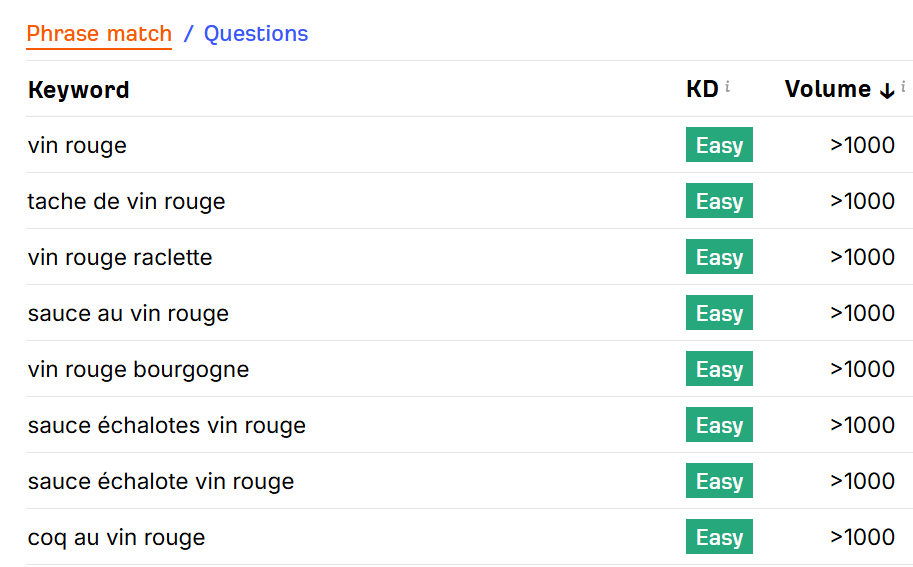
Let’s take "trainers" by way of example – a keyword in English with 10,000 monthly searches:
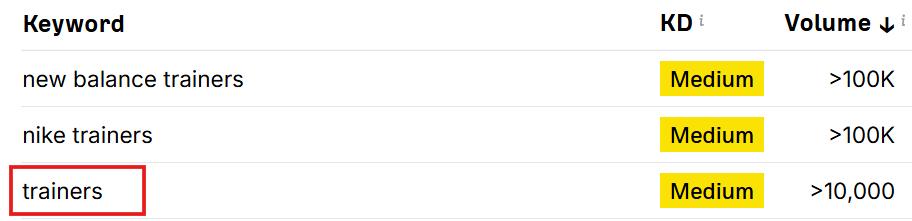
Likewise, the also-used term “sneakers” delivers the same result in English:

However, the direct French translation of trainers "formatrices" (feminine) and “formateurs” (masculine) get just 100 searches. What’s more, "formatrices" and “formateurs” have nothing to do with footwear. Instead, they’re people who teach practical skills, like instructors or coaches.

Optimizing your French ‘trainer’ pages for either of those terms is a disastrous move, and not one that could win the hearts and minds of your French audience. This example shows the need for research, and going beyond direct translations.

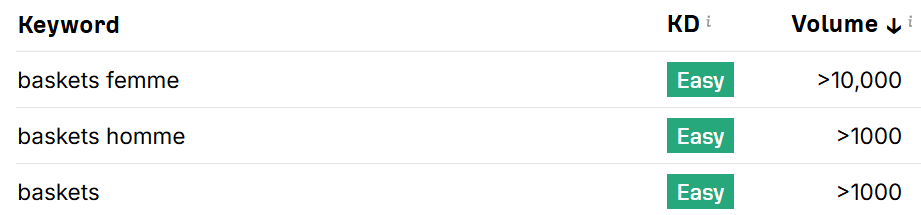
As an alternative, a direct translation of “sneakers” pulls 10,000 searches monthly for “baskets femme” and 1,000 searches for “baskets homme” and “baskets”. So, lots more traffic potential, and “baskets” happens to be the preferred French word for athletic shoes:
Here’s your keyword research process:
AI Overviews have shifted keyword strategy too, as long-tail questions dominate AI-generated results. Ultimately, search volumes are useful guesswork and have never been set in stone.
A search term like "Best way to translate Shopify store to German" may be too niche to score a high search volume, but even zero volume keywords are worth pursuing if relevant to the needs of your ICP.
Build separate keyword lists for each market, and go granular. What works in Mexico might flop in Spain, despite both speaking Spanish. Regional variations matter more than you think.
See our article on Optimizing Keywords for International SEO Keyword Research for more information.
Nothing beats local knowledge. Native speakers understand nuances that translation tools miss. They know what connects, what offends, and what converts. Local SEO experts bring invaluable insights:
Local experts can spot issues instantly. That clever wordplay that works in English might be nonsensical in Portuguese, and your keyword strategy for Germany could be completely wrong for Austria.
Find consultants through international SEO directories or professional networks. Look for proven experience in your target markets, not just language skills.
If you have budget constraints, start with one key market. Learn the process, see results, then expand. The insights from one market often apply to similar regions.
Local expertise is needed, but it comes with time and costs. You can reduce the need for human input through automation. Weglot’s AI-powered translation tool delivers instant multilingual content by integrating with leading AI translation engines – DeepL, Google Translate, Microsoft Translator – plus a custom AI Language Model powered by OpenAI and Gemini.
Weglot's AI Language Model takes translation quality beyond standard AI translation. This custom model trains on your brand voice, past manual edits, glossary terms, and target audience characteristics. It generates translations that sound like your brand – automatically, and with no manual training required.
The AI Language Model learns continuously from your workflow:
Translation quality runs on autopilot while full editing control remains available. Translations improve over time without manual intervention, and new pages automatically inherit your brand voice.
For businesses scaling to multiple languages, this approach saves hundreds of hours. Instead of having to do the heavy-lifting, local experts can be brought in for content refinement, wider marketing insights, and legal advice.
Website speed affects search rankings across all languages. Since July 2018, Google has used page speed as a ranking factor. Slow sites (3+ seconds) lose traffic to faster competitors.
Google's Core Web Vitals measure user experience across three metrics. Fail these, and your rankings tank – regardless of perfect translation.
Every second counts. For multilingual sites, speed issues compound:
Quick wins for faster multilingual sites:
Test your speed with Google’s PageSpeed Insights, and check each language version separately. Performance can vary between versions. Weglot uses a global CDN to serve translations quickly, so your content loads fast whether visitors are in Tokyo or Toronto, with no additional configuration needed.
Check out our video guide for more detail!
Businesses expanding internationally face a major choice – invest in multilingual SEO or lose traffic to localized competitors.
AI-powered website translation makes multilingual SEO accessible to businesses of any size. Traditional translation takes weeks or months, while AI translation completes in minutes or hours. This approach reduces traditional translation costs while maintaining quality.
Real companies prove what’s possible with the right approach:
Prioritize our nine SEO essentials for your multilingual site, and when writing and translating content, keep both search engines and AI Overviews in mind. Your content needs perfect technical implementation AND human-friendly clarity.
Alternatively, skip the technical complexity. Weglot’s AI translation handles hreflang tags, metadata translation, and SEO-friendly URLs automatically. Full editing control remains available when you need it – but most sites run on autopilot with minimal manual refinement.
Start your 14-day free trial of Weglot today and launch your multilingual site in minutes.


Trusted by 70,000+ global brands


Multilingual SEO shows the right language version of your website to the right people. French searchers see your French pages. English searchers see your English pages. You create separate pages for each language, and search engines match user language to page language.
Yes – language is a primary ranking signal for search engines. Google matches page language to query language when showing results, so it’s a major factor in WordPress multilingual SEO . Pages in the user’s search language rank higher than pages in other languages, and language indicators in URLs, hreflang tags, and page content all influence rankings. Native language content improves engagement metrics like time on page and bounce rate – see step 7 for language-specific keyword research guidance. Check our article about SEO translation and localization for more details.

Reach new audiences in minutes without sacrificing your team’s time. Anyone can install it.


