Try Weglot for free


One big question and 1.3 million citations analyzed later, and the verdict is clear: translated websites win more visibility in Google AI Overviews, with promising signs in ChatGPT too.
What we wanted to know was: If LLMs cite content in one language, will they also cite it in others?
Spoiler: Translated websites gain 327% more visibility in AI Overviews for non-available language queries, according to our analysis of 1.3 million citations.
Even better, translated websites are more frequently cited in Google AI Overviews across all languages analyzed in the study, demonstrating how translation significantly boosts global visibility.
Unless you’ve been living under a rock, you’ll have noticed just how drastically search has changed. Hardly a day goes by on LinkedIn without another study (if you can’t beat them, join them, right?), a “guaranteed” new strategy, or the latest quick win everyone’s chasing. And let’s be honest, we’ve all tried them.
While being the best in traditional search was once about ranking in the top spot, it’s become abundantly clear that we’re all now a little clueless on the “core tactics” that will help you get cited.
As more of us turn to ChatGPT and other LLMs - and with Google’s AI Overviews suddenly arriving in summer 2024 - one key question remained unanswered: When users search in different languages, how do LLMs and AIO decide which websites to cite?
If you’re like us and a regular Ahrefs user, you’ve probably seen their June 2025 data showing that Google’s translate.google.com proxy pulls in 377 million monthly visits from untranslated websites.
Instead of sending users to the original sites, Google was (or is?) keeping them on its own translated versions, effectively stealing traffic from its original content source. Luckily, a few weeks later (a coincidence? We’ll never know), Google started rolling this back somewhat, but it was still prevalent in certain countries.
And it got us thinking about whether this visibility problem extends to AIOs and LLMs.
“The problem grows because untranslated sites never build authority in unserved languages. As a result, they have little user engagement, which reduces trust signals that Google values.”
Eugène Ernoult, CMO at Weglot
Want the summary? Check out our video:
So, back to our original question: If LLMs cite content in one language, will they also cite it in others?
To answer this question, we carried out in-depth research on how AIOs and LLMs treat translated versus untranslated content.
We created a two-phase study focused on Spanish-language markets in Spain and Mexico.
Our methodology converted the top 50 non-branded keywords per site into natural language queries. To do this, we:
This generated 22,854 queries in Phase One and 12,138 in Phase Two.
Using Ellipsis software, we tracked these queries to measure how often each site appeared in AI search results. The data was analyzed by country (Spain and Mexico) and AI search method (Google AIO and ChatGPT) for sites with and without a translation. The findings were clear.
The data confirmed our hypothesis: untranslated websites lose significant visibility for queries in other languages, even if they rank highly in their main available language.
Google AI Overviews:
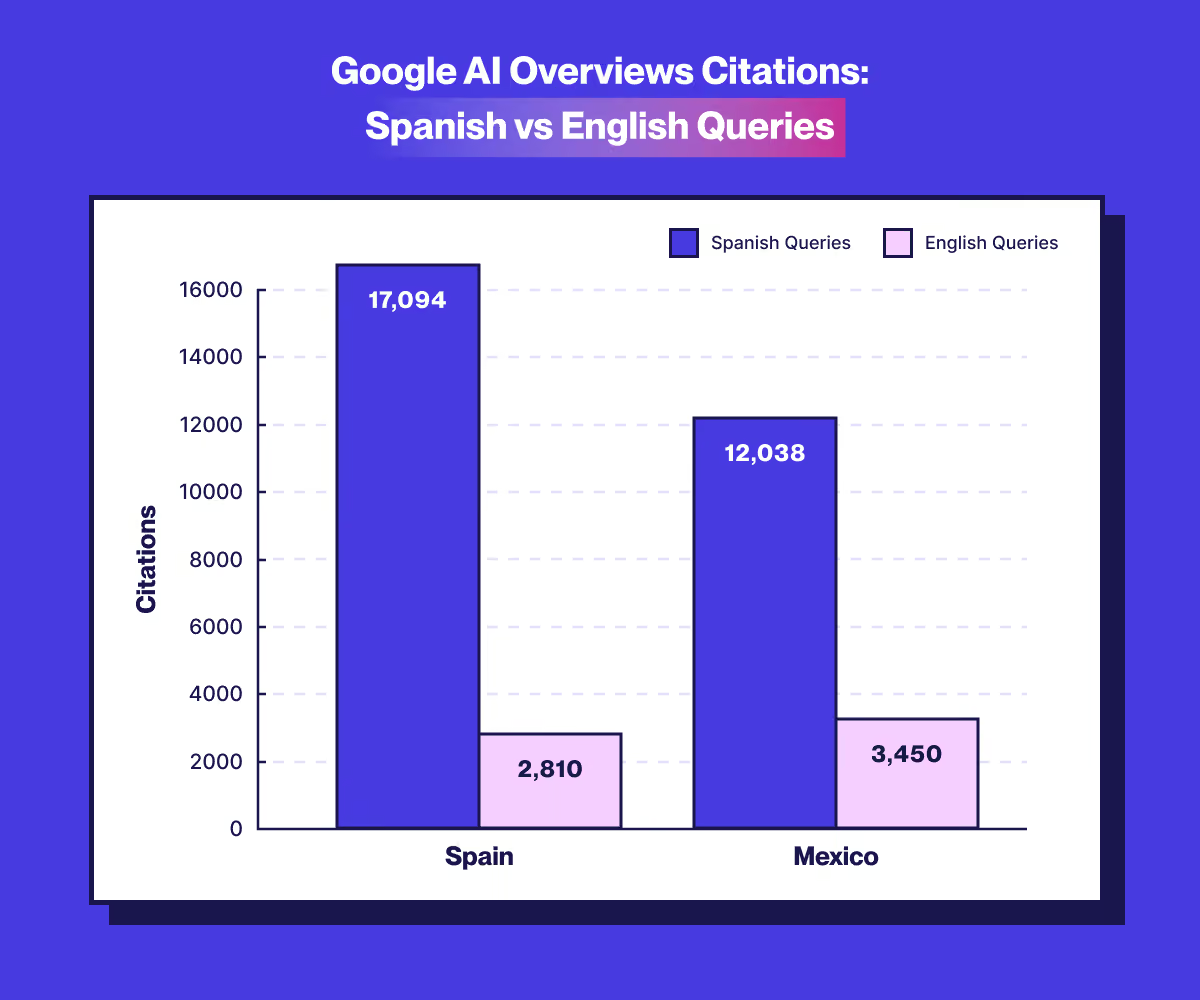
ChatGPT: While less dramatic, ChatGPT still showed the same bias. Spanish sites received 3.5% fewer citations in English, with Mexican sites 4.9% fewer.
The comparison group revealed the advantage of proper translation – sites appear significantly more in AIO searches in the second language when translated.
Google AI Overviews: The impact on Google's AIO is huge, with translated sites achieving massive visibility gains in English searches.
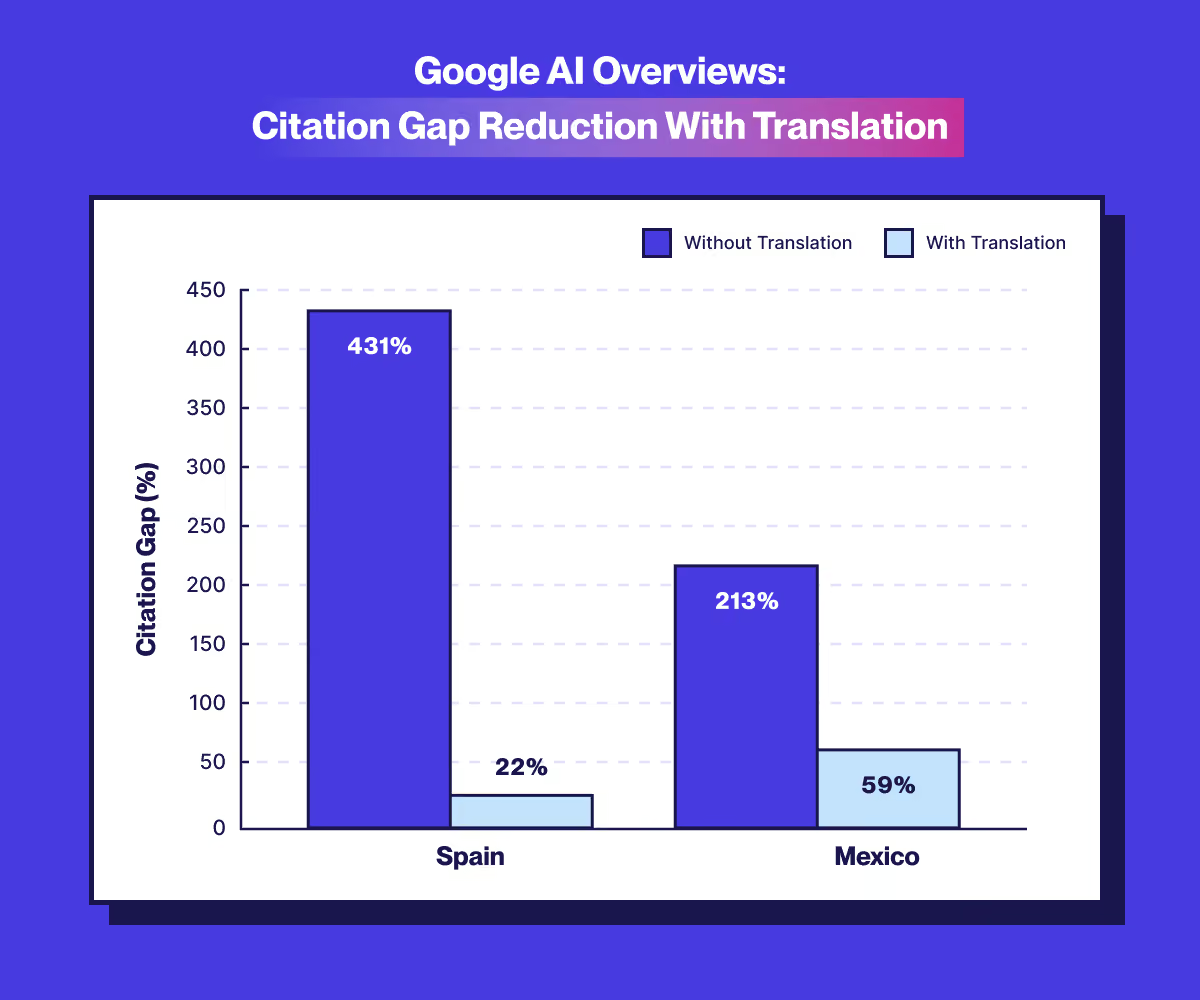
ChatGPT: ChatGPT shows virtually no language bias for translated sites. In fact, Spanish sites receive 0.3% more citations in English than Spanish, while Mexican sites see 1.8% more English citations than Spanish.
Our research shows that translation levels the playing field in ChatGPT citations. The real difference emerges in AI Overviews, where the majority of global queries take place.
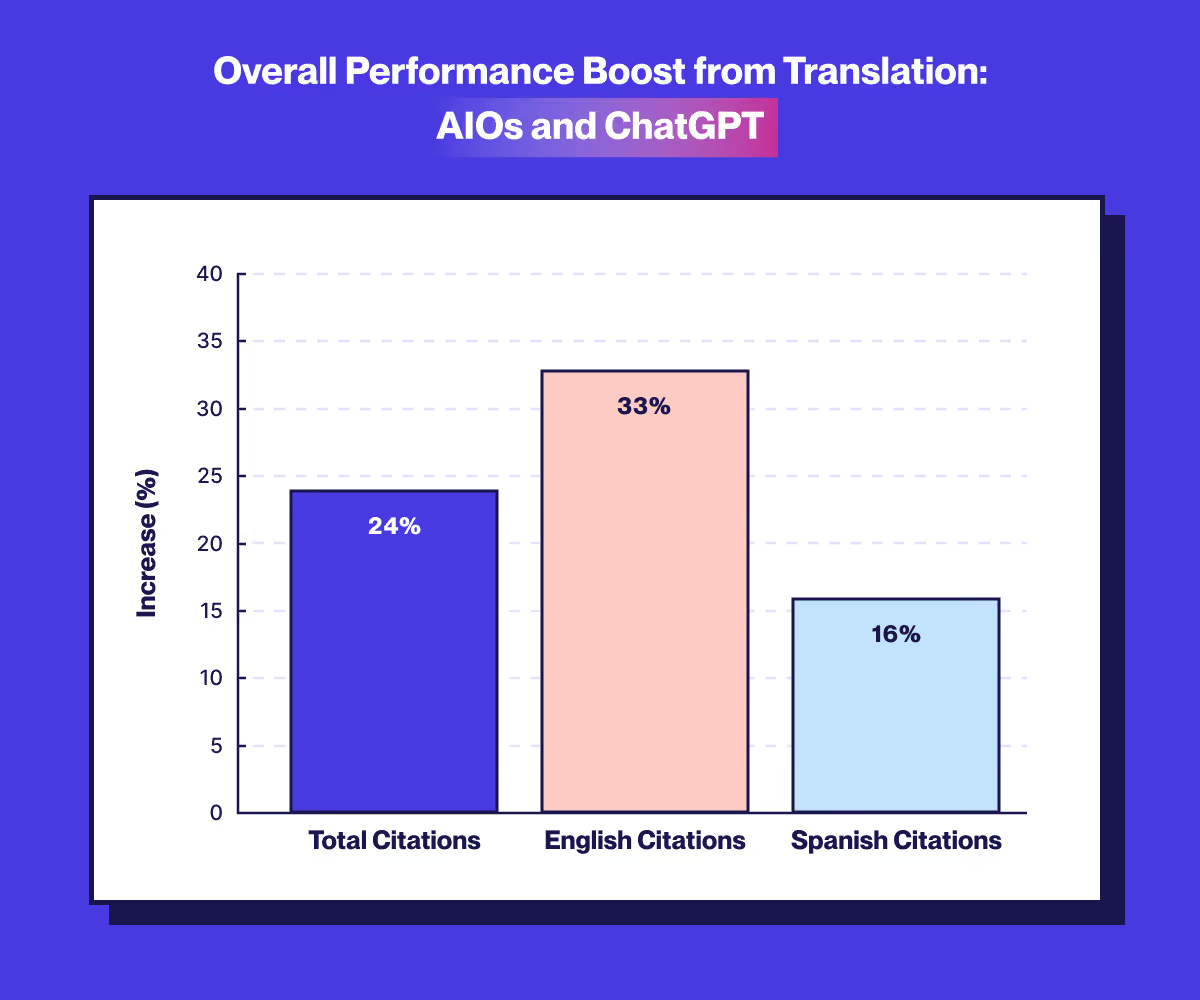
Translated sites perform better across all metrics.
Translated sites received 24% more total citations per prompt than untranslated sites. Broken down by language, translation resulted in a 33% increase in English citations and a 16% increase in Spanish citations per query.
Our findings suggest that translation signals authority and trustworthiness to AIOs and ChatGPT, improving citation performance across all languages, not just the language they are translated to.
To show why this visibility gap matters, let’s look at a real case from our study.
One of the sites analyzed is a major Spanish book retailer. They stock English titles, ship worldwide, and clearly serve English-speaking customers. Yet because their website is not translated into English, they are nearly invisible in English-language searches.
Here’s what happens:
The result: the business loses both visibility and customers, despite offering exactly what English speakers are looking for.
{{social-proof-cta-banner}}
Our study shows that when people search in a given language, AI overwhelmingly prefers to cite content written in that same language.
As a result, untranslated sites are nearly invisible to international audiences using AI Engines for research - missing out on huge numbers of potential citations in non-available language queries. For businesses aiming to grow internationally, this represents a major missed opportunity.
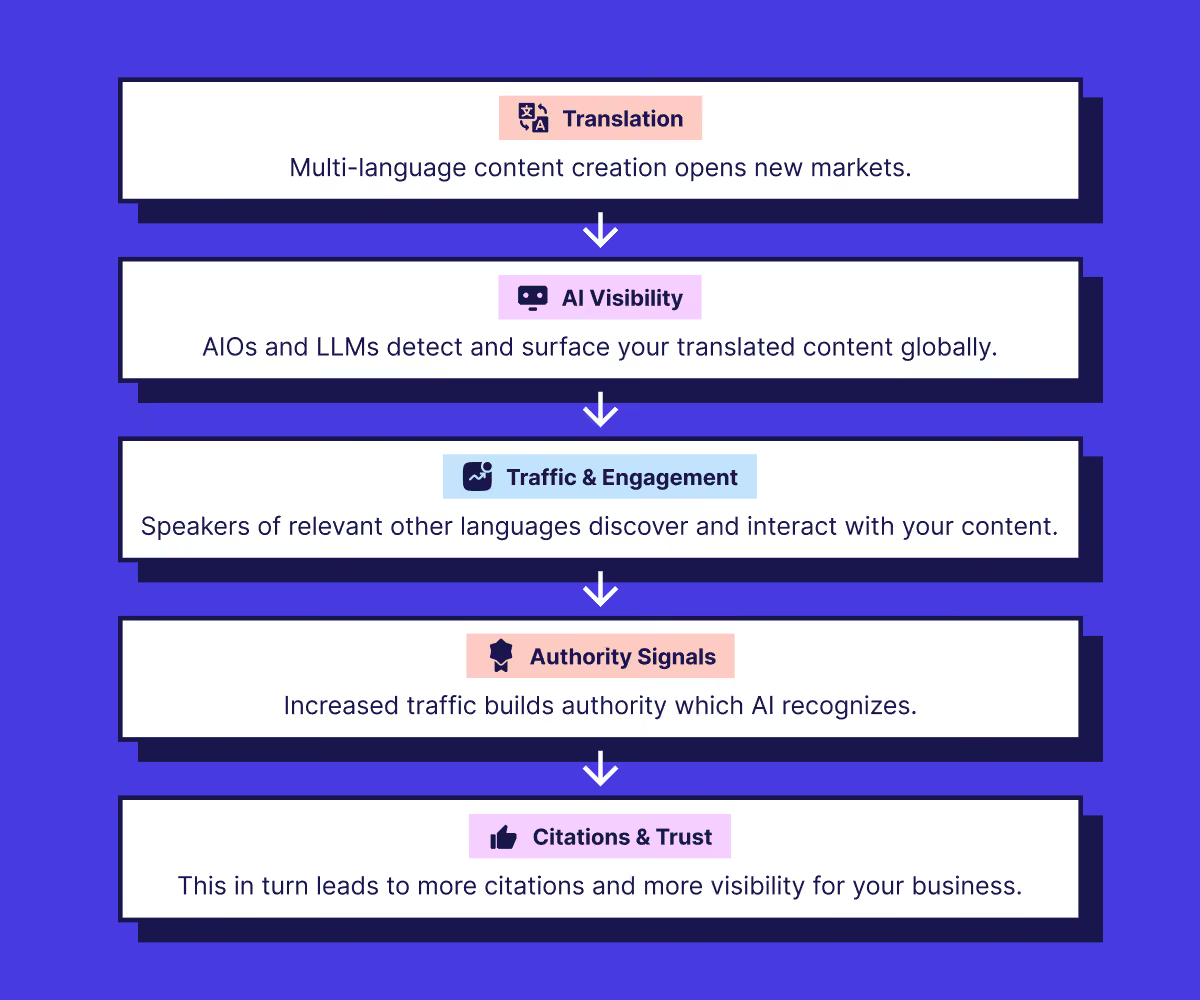
The takeaway is simple: untranslated means invisible. To gain visibility in AIOs and LLM searches - especially if you serve an international audience - website translation is essential.
The rest of our studies looking into the impact of translated sites on AI search is available in our multilingual GEO hub.

We’ll get your first languages live. You decide how far you want to go. Try Weglot for free today.
Trusted by 110,000+ global brands





Weglot is tested and trusted by brands worldwide since 2016. Join them today.


The best way to understand the power of Weglot is to see it for yourself. Test it for free and without any engagement.
A demo website is available in your dashboard if you’re not ready to connect your website yet.


Language coverage will make the biggest difference. AI search engines prioritize sources that match the query's language, so content that only exists in English rarely gets cited in other languages; in our analysis of 1.3 million citations, translated websites gained 327% more visibility in AI Overviews than single-language sites.
Then make each language version easy to retrieve and cite: give it a dedicated URL, hreflang tags, and translated metadata, and keep translations in sync as your content evolves. Weglot handles that technical layer automatically.
For the full 5-step process, read our multilingual GEO guide.
No (for now that is). Google itself still sends roughly 190 times more traffic to websites than ChatGPT does, even with ChatGPT’s rapid growth. Search isn’t shrinking. Rather, it’s expanding into more places. GEO is a new visibility surface on top of the SEO foundation, not a replacement for it.
Adding a new language expands the range of queries your content can appear in, but only if the translation is complete, properly structured, and maintained.
Partial translations create coverage gaps that limit visibility, which means AI systems simply don’t ‘see’ your content for those queries.
With Weglot, new languages are implemented with the correct URL structure, hreflang, and metadata from the start, so your visibility grows as soon as the content goes live. As you add or update content, the translated versions sync automatically through CMS integration.