

Try Weglot for free


If your business sells to people in Quebec, the short answer is usually yes. Quebec's language law treats your website as commercial publishing, and commercial publishing aimed at Quebec has to be available in French. This is not new, but it has more teeth than it used to, and the Office québécois de la langue française has started fining companies over English-only web pages.
This page explains what the law actually asks for, who it applies to, what changed recently, and how to make your site compliant without rebuilding it. It is general information to help you understand the rule, not legal advice for your specific case.
Quebec's Charter of the French Language is the law in question. Section 52 covers commercial publications "regardless of the medium used," and that wording is what brings websites, online stores and social media into scope.
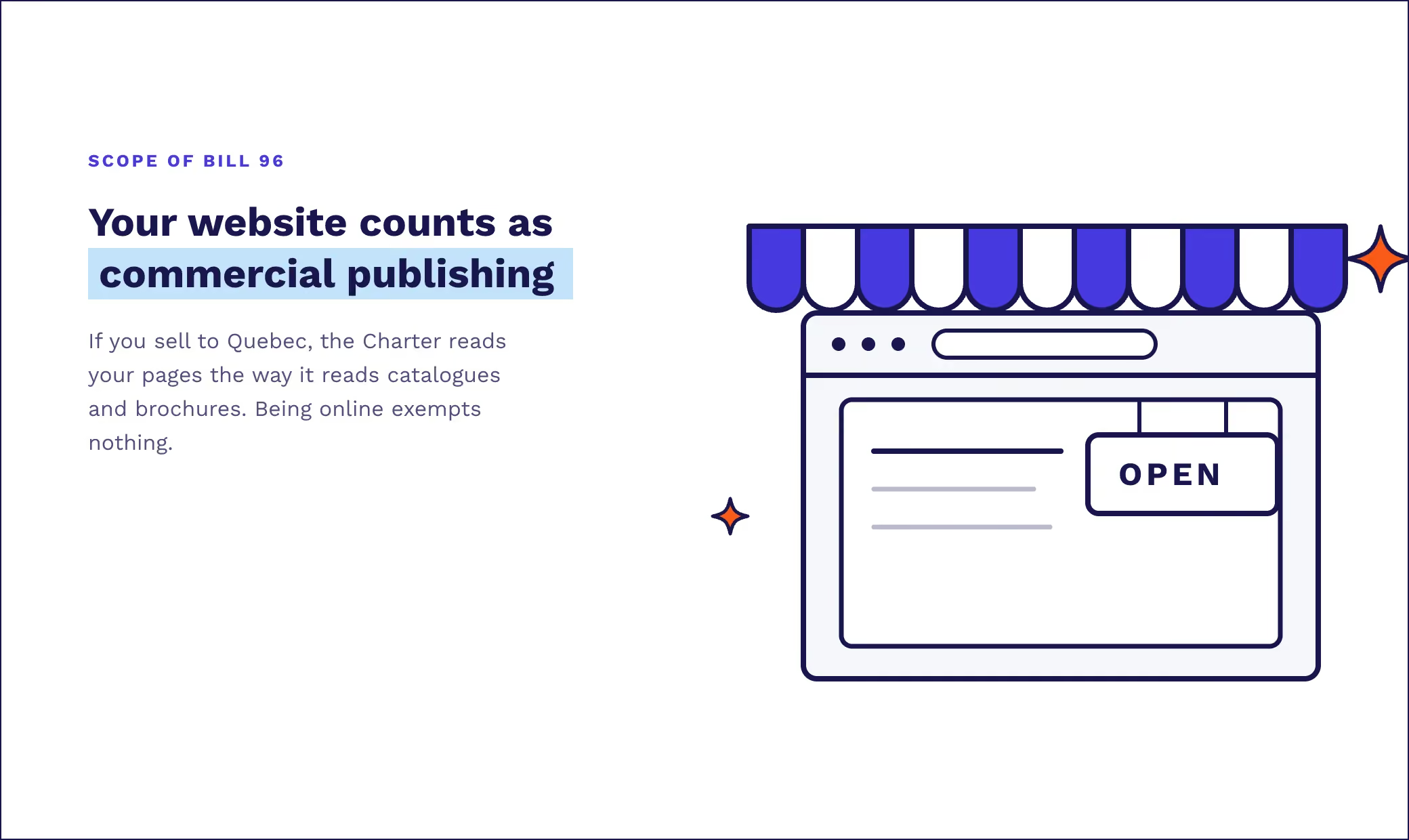
So a public-facing commercial website read by people in Quebec is treated like any other commercial publication. It needs to be available in French.
The clear case is any business operating in Quebec. If you have a presence there, the rule applies to your commercial web content.
The less settled case is a seller outside Quebec who targets Quebec customers online. Secondary guidance suggests the duty can reach that far (Éducaloi, does your website comply), and this is the point to keep carefully worded, because it is asserted rather than fully settled. If your business has no establishment in Quebec but sells there, this is worth a quick check with counsel rather than an assumption either way.
Your commercial web content. The part people often miss is the standard the French version has to meet. Under the Regulation respecting the language of commerce and business, the French version must be available on terms at least as favorable as any other language, which reads in practice as French content that is as complete and as easy to reach as your English content.
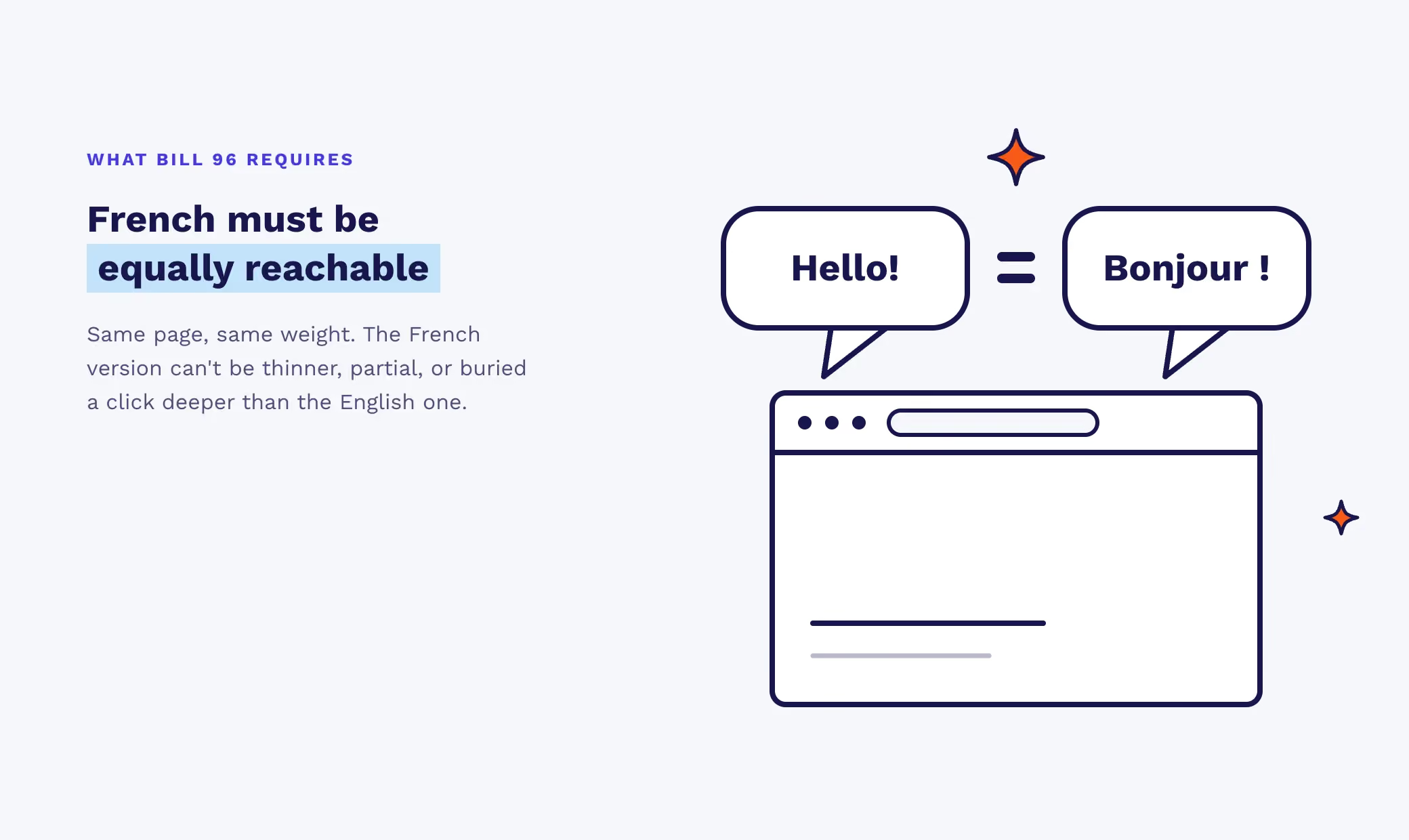
In plain terms, a French page that is harder to find, shorter, or lower quality than the English one is itself a problem. French cannot be the afterthought version.
One number changed that gets quoted a lot, and it is worth being precise about what it touches. On June 1, 2025 the threshold for mandatory francisation registration with the OQLF dropped from 50 employees to 25.
.avif)
That threshold governs whether a business has to register for a formal francisation process. It does not govern the website rule. The requirement to publish commercial web content in French applies regardless of how many people you employ. A 5-person online store selling to Quebec is in scope just as a large company is.
The OQLF enforces the Charter, and cases are prosecuted before the Court of Quebec. For a business, first-offence fines run from 3,000 to 30,000 Canadian dollars per offence, doubled for a second offence and tripled after that, with each day capable of counting as a separate offence.
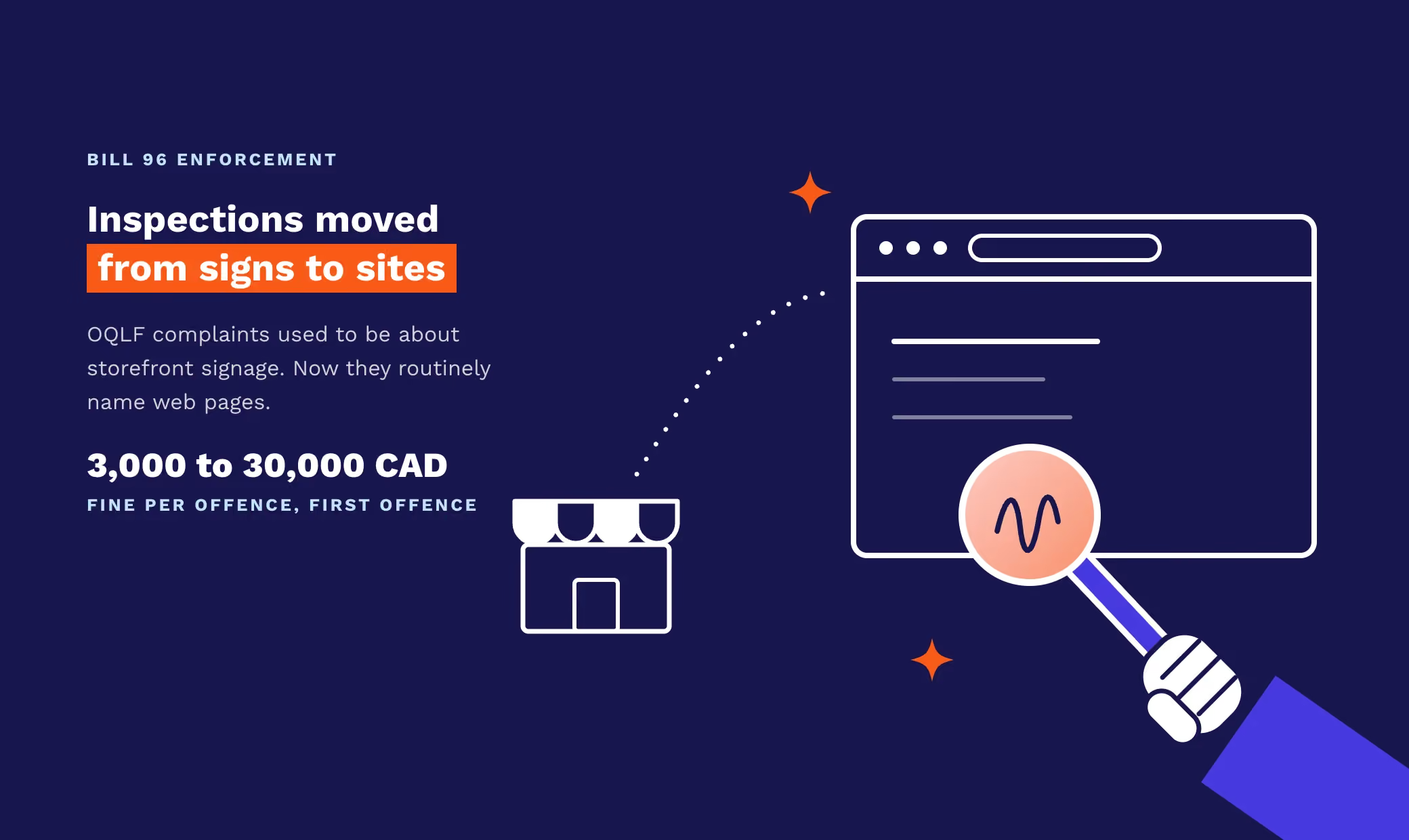
This is not theoretical for websites anymore. Recent cases have landed at the lower end for English-only commercial web content, around 3,000 dollars each, including URBN Canada and Waterco. The amounts are modest, but the direction is clear: the OQLF is now acting on web content, not just storefront signage.
A practical checklist:
Weglot helps you create and manage the French version of your existing site, so the French content sits alongside the English and is reachable from the same navigation. The translation is AI translation that stays true to your brand voice and your page context. For legal-facing copy, keep a human review step before you publish, rather than putting an unreviewed automatic translation live. If your site runs on WordPress or an e-commerce platform, Weglot connects directly, so adding French does not mean rebuilding (learn more by reading our post on top WordPress multilingual plugins).
Not sure how much content you would be translating? The website word count tool gives you a quick estimate before you start.
Maybe Bill 96 does not reach your business. You sell to Canada but have no establishment in Quebec, or your Quebec sales are small enough that you are weighing whether to bother. The legal answer and the business answer are different questions, and it is worth holding them apart. Even with no obligation at all, adding Canadian French is often a good move on its own merits.
According to Statistics Canada's 2021 Census, 82% of people in Quebec have French as their first official language spoken. A French version of your site is not a courtesy, it is the difference between being legible to that market and being skimmed and left. People trust and buy more readily in their own language, and that holds whether or not a law is involved.
There is a visibility case too. A French version of your pages can appear for French search queries you do not show up for today, including in AI-generated answers where relevant. If your competitors are English-only, a clean Canadian-French presence is a way to be found where they are not.
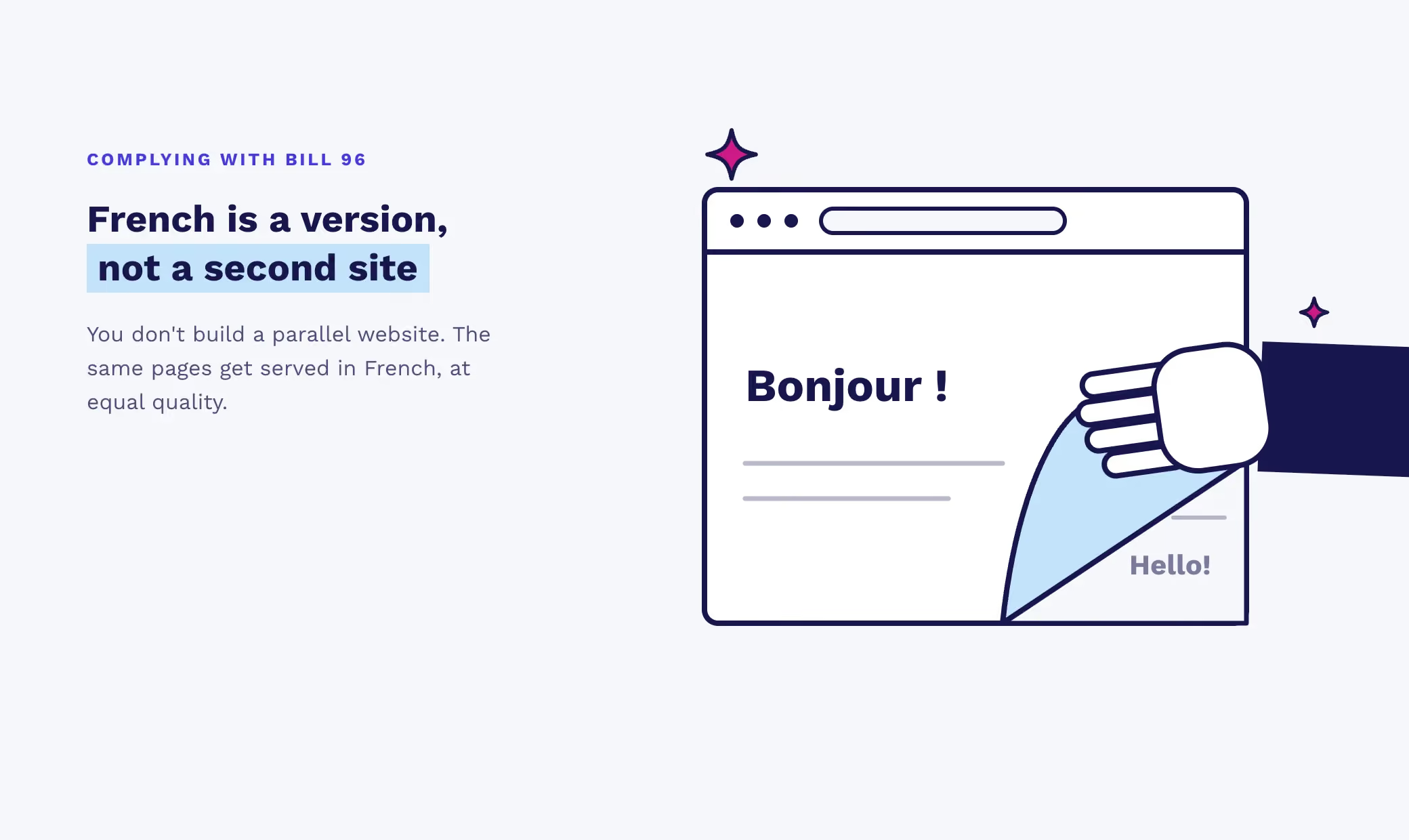
And it is far less work than people expect. You are not running a separate French site, you are serving a French version of the one you have, kept in step automatically as you update the original and there are plenty of brands already doing exactly this. So the honest framing is 2 doors to the same room. If the law applies to you, French is the cost of selling to Quebec. If it does not, French is still one of the cheapest ways to reach a market that is right next door and underserved. Either way the build is the same, and either way it pays for itself in reach and trust rather than in avoided fines.
Your commercial web content aimed at Quebec does. The French version has to be as complete and as easy to reach as the other-language version, so it cannot be a thin summary.
If you operate in Quebec, yes. If you sell to Quebec from outside it with no establishment there, the reach of the rule is less settled and worth confirming with counsel.
No. The 25-employee threshold is about registering for francisation with the OQLF. The website rule applies regardless of how many people you employ.
For commercial and legal-facing content, an unreviewed automatic translation can miss legal wording, product details, or brand tone. The French has to be complete, correct and on-brand, which is why a reviewed AI translation is the safer route.
It depends on how much content you have. The website word count tool gives you a quick estimate, and you can see plans on the pricing page.
This page is general information about Quebec's language requirements for websites. It is not legal advice, and it does not create a lawyer-client relationship. For how the rules apply to your specific business, consult a qualified Quebec lawyer.

We’ll get your first languages live. You decide how far you want to go. Try Weglot for free today.
Trusted by 110,000+ global brands








Weglot is tested and trusted by brands worldwide since 2016. Join them today.


The best way to understand the power of Weglot is to see it for yourself. Test it for free and without any engagement.
A demo website is available in your dashboard if you’re not ready to connect your website yet.


%402x.avif)


